The Problem
Demand was growing for more than just on-demand labour. Employers wanted to find workers for ongoing periods - not just one-off shifts. Because the need was longer-term, the vetting bar was higher too. We needed to understand whether this was a real, significant opportunity or a vocal minority.
Our Approach
In addition to our usual UX process, we committed to validating the problem through data before designing anything. We wanted to understand where this need was actually coming from.
Analysis
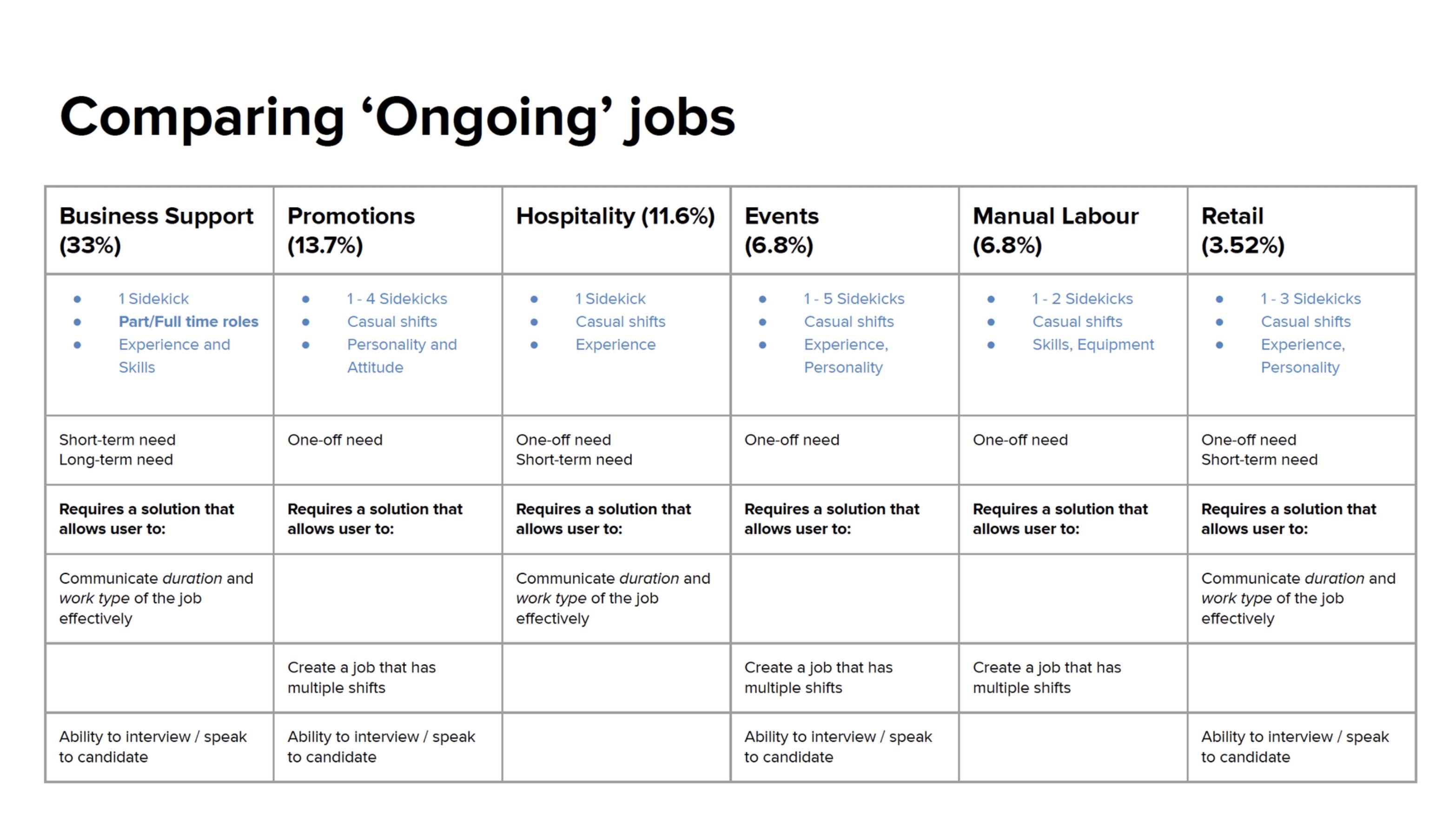
I took a sample group of jobs across each category and read through the job titles to identify what employers were genuinely asking for. The data revealed two clear insights:
- Actual demand for "Ongoing" jobs was almost entirely concentrated in Business Admin - not spread across categories as assumed
- The majority of "Ongoing" jobs posted in other categories were regular jobs posted incorrectly, driven by limitations in the technology rather than real intent
Solutions
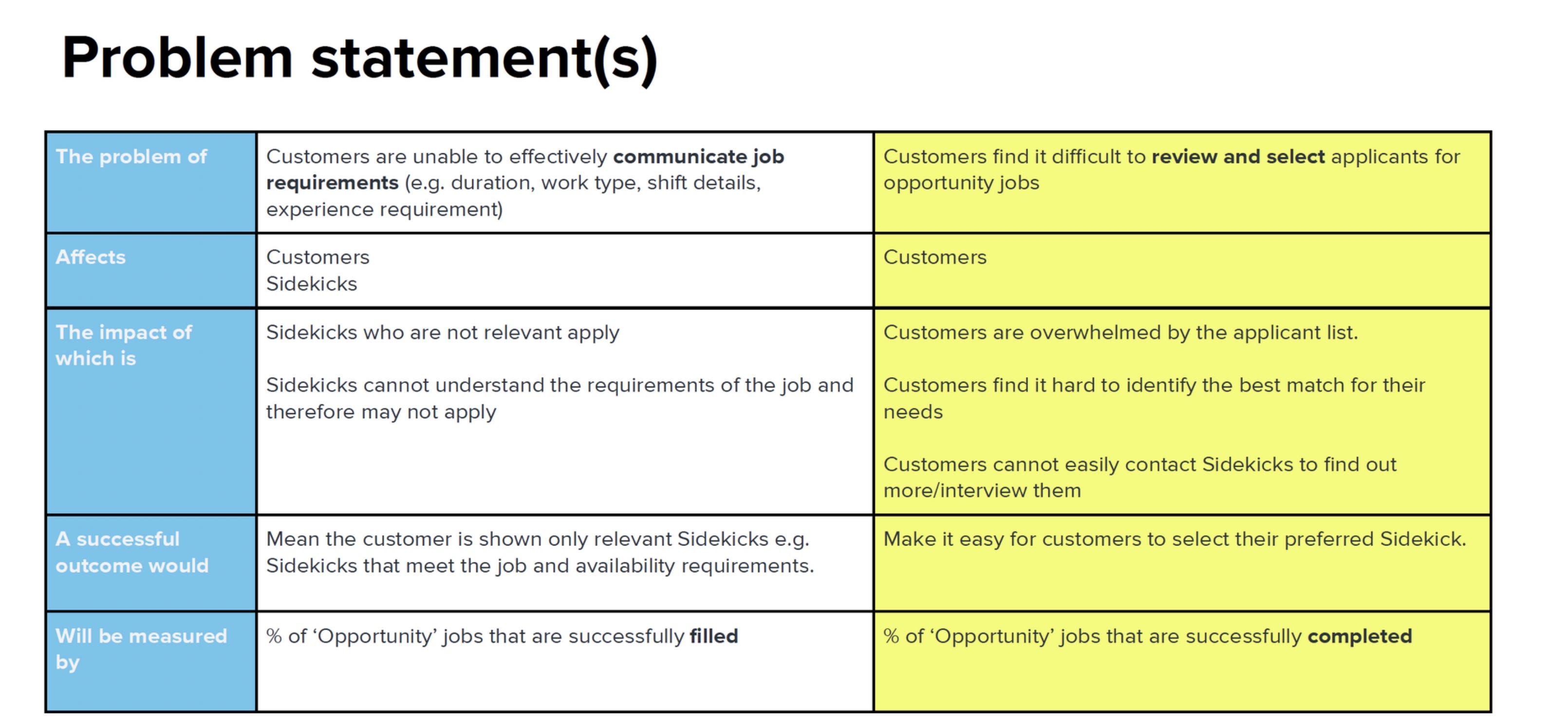
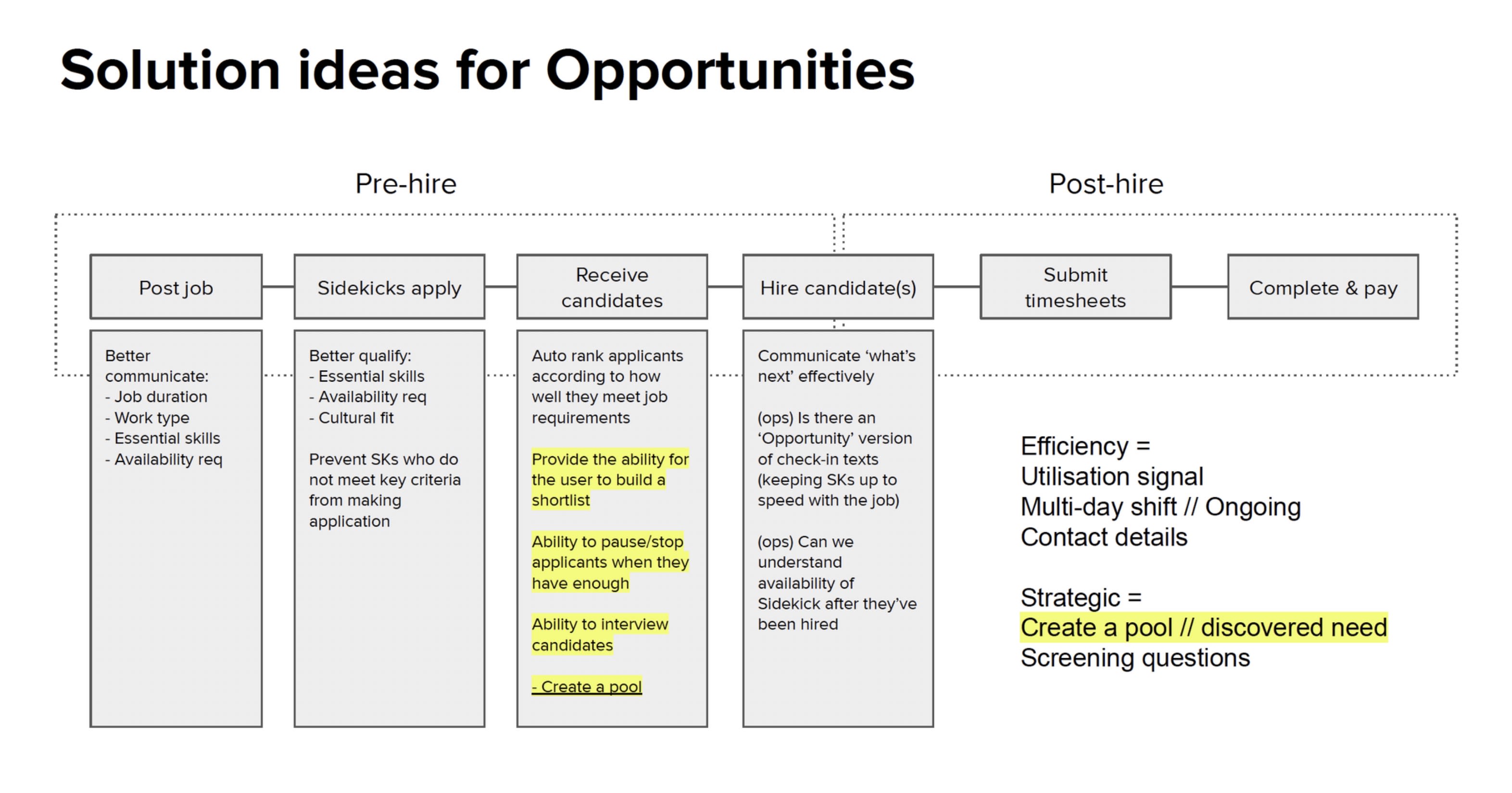
We translated these findings into problem statements and presented them to stakeholders to help prioritise which problems to actually solve. I also mapped the complete journey of a hirer, highlighting where the product had the most opportunity to serve them better.
Opportunities
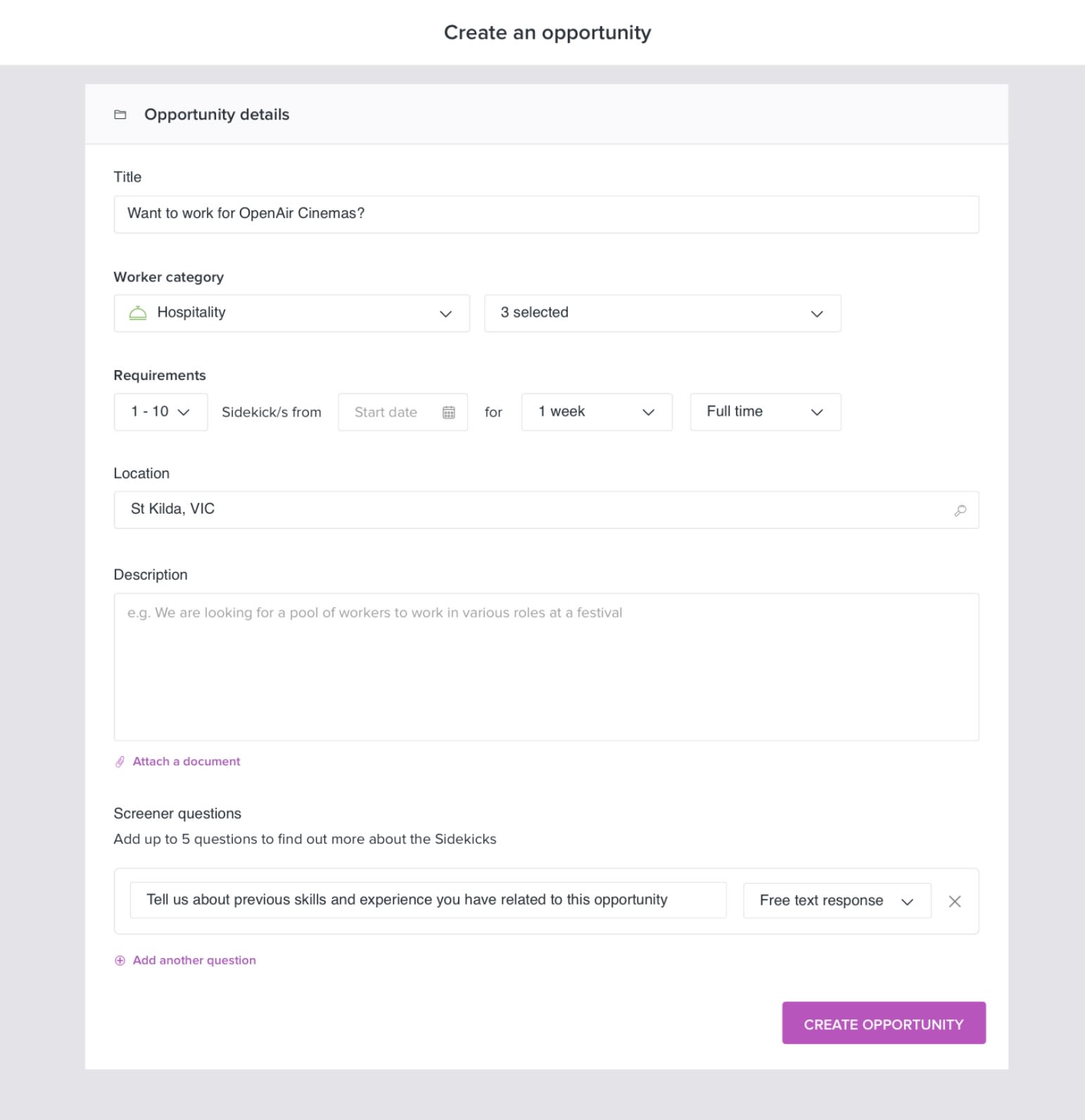
Based on what we now knew, we designed a new job type called an "Opportunity" - distinct from a one-off shift. Workers would apply, be added to a Talent Pool if successful, and employers could then post actual shifts to their pool of pre-screened workers.
This gave employers a shortlist of vetted candidates, a pre-screening mechanism through application questions, and a reusable pool they could draw from whenever work came up.
The data was what made this work. Without it, we would have built a broad ongoing-hire product across all job categories. The analysis pointed us at a much more specific and valuable problem - and gave us the confidence to deprioritise everything else.
In retrospect: I'd now build shared dashboards and a research repository so the whole team can access and act on data independently. Getting insights shouldn't require one person to run the analysis every time - it should be infrastructure.